

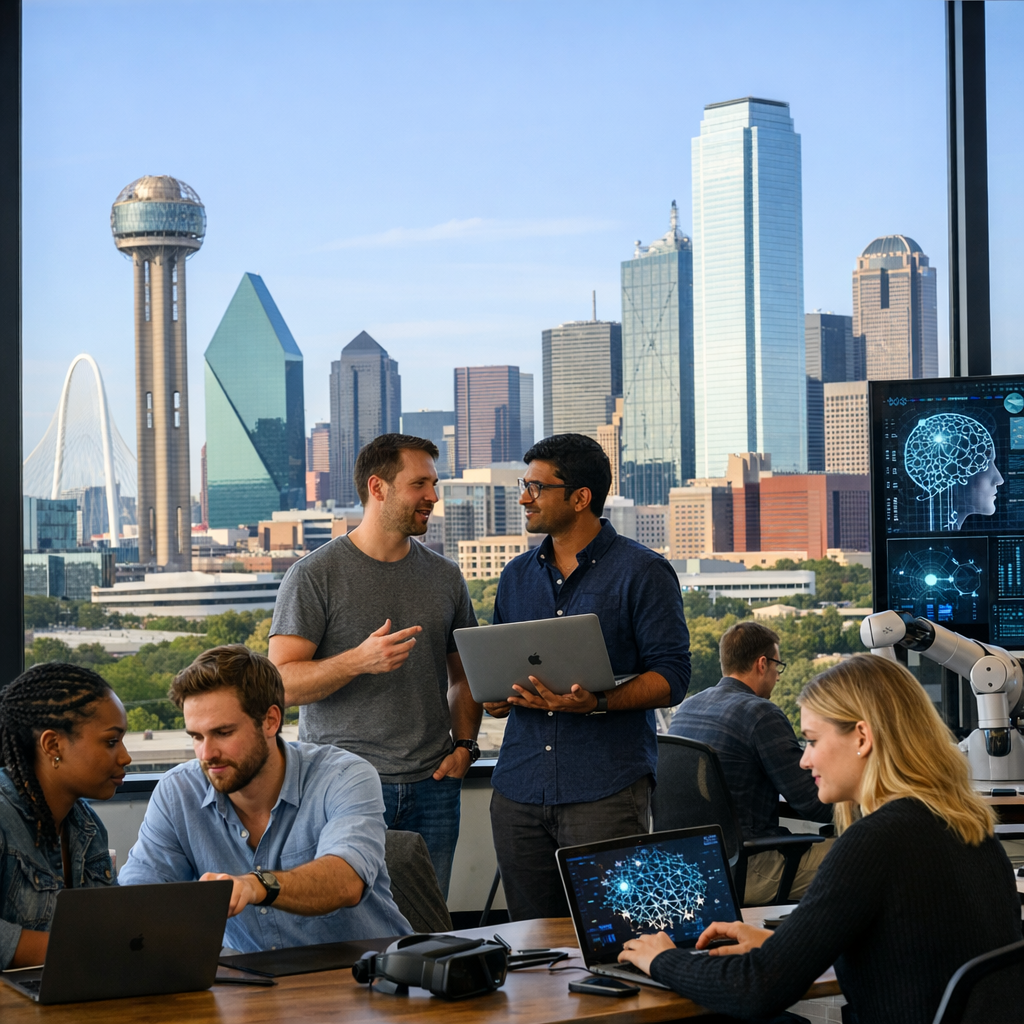
Dallas is rapidly establishing itself as a prominent center for artificial intelligence (AI) innovation, with a burgeoning ecosystem of startups and established tech companies driving transformative changes across various industries.
AI Startups Fueling Growth
Several AI-focused startups are making significant strides in Dallas. For instance, Cognitivescale, founded in 2014, specializes in delivering enterprise-grade AI solutions that enhance decision-making and automate processes. Their flagship product, Cortex AI, integrates seamlessly with existing enterprise systems, enabling organizations to scale AI initiatives efficiently.
Another notable company is Island, a cybersecurity firm that has developed the Enterprise Browser, providing organizations with complete control over how work is done in SaaS and web applications. Island achieved unicorn status in March 2022 with a valuation of $5 billion.
Tech Giants Embrace AI
Established tech companies are also contributing to Dallas’s AI landscape. Uber launched its autonomous vehicle service in the city, offering robotaxi services in downtown and surrounding neighborhoods. The fleet, developed in partnership with Avride, is based on the electric Hyundai Ioniq 5 and equipped with advanced detection systems to ensure safe navigation.
Similarly, Lyft announced plans to introduce self-driving taxis in Dallas, powered by Mobileye’s autonomous technology. This initiative aims to integrate autonomous vehicles into Lyft’s ride-hailing platform, with plans to expand to additional cities following the Dallas launch.
Recognizing AI Innovators
The city’s commitment to AI innovation is further highlighted by initiatives like the AI 75, which spotlights key figures in Dallas-Fort Worth’s AI economy. Honorees range from executives at major corporations to founders of cutting-edge startups, reflecting the diverse talent driving the region’s AI advancements.
Challenges and Considerations
While the rapid adoption of AI presents numerous opportunities, it also brings challenges. Experts emphasize the need for policies and regulations to address concerns such as data centers’ power and water consumption. Additionally, there is a consensus that AI should complement rather than replace human decision-making, particularly in activities requiring interpersonal interactions.
As Dallas continues to embrace AI, the collaboration between startups, established companies, and policymakers will be crucial in navigating these challenges and ensuring sustainable growth in the tech sector.