

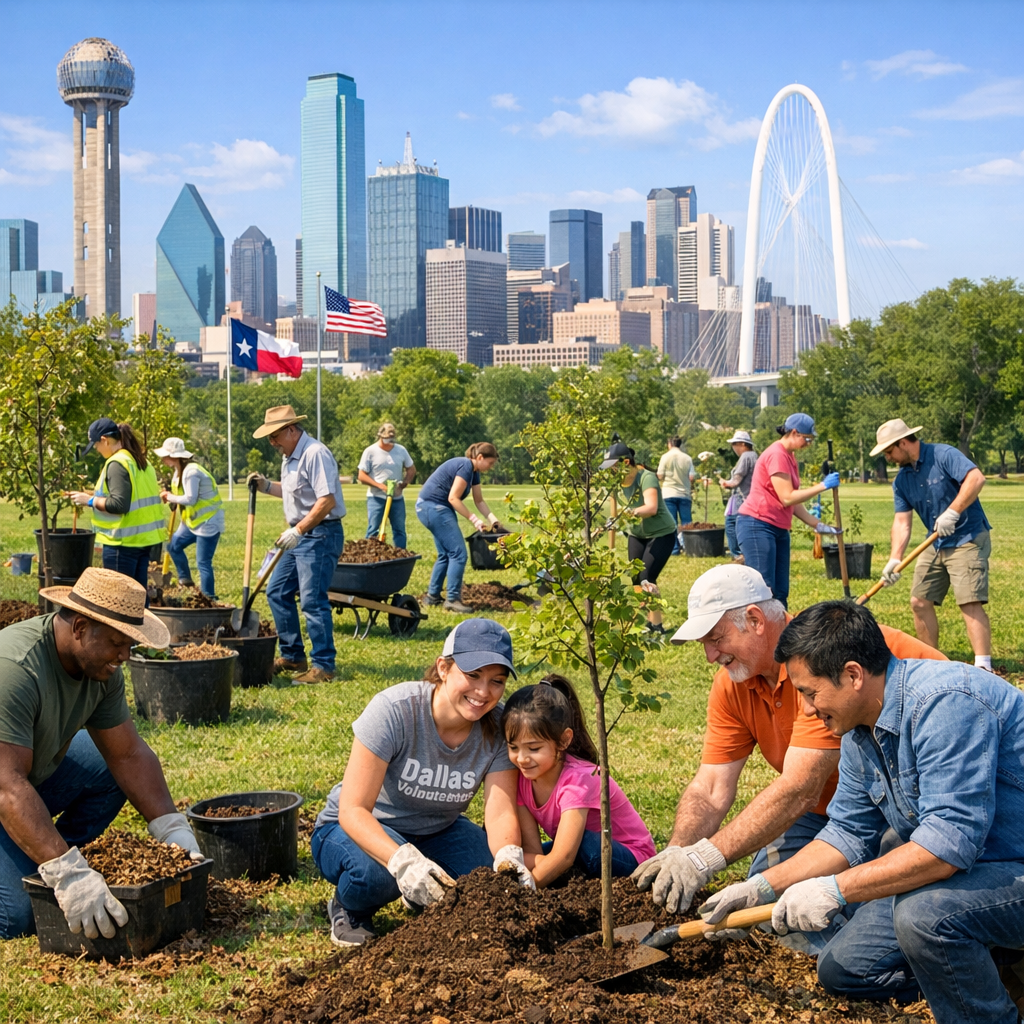
Dallas is actively pursuing environmental sustainability through a series of initiatives aimed at reducing greenhouse gas emissions, enhancing green spaces, and involving the community in environmental stewardship.
Comprehensive Environmental & Climate Action Plan (CECAP)
In 2020, the City of Dallas approved the Comprehensive Environmental & Climate Action Plan (CECAP), outlining strategies to mitigate climate change impacts. The plan focuses on eight key areas: air quality, buildings, ecosystems, energy, food access, transportation, water resources, and zero waste. Goals include ensuring that by 2030, 80% of Dallas residents live within a half-mile of a park or trail, reducing waste by 35% through landfill diversion, and installing electric vehicle charging stations to support 39,000 vehicles.
Greenhouse Gas Emissions Reduction
According to the city’s 2023 Greenhouse Gas Emissions Inventory, Dallas produced approximately 18.6 million metric tons of carbon dioxide equivalent, marking an 11% decrease from 2015 levels. This reduction reflects the city’s commitment to lowering emissions and improving air quality.
Enhancing Green Spaces
Efforts to expand and improve green spaces are underway. The upcoming Big Cedar Wilderness Park, a 300-acre area in southwest Dallas, is set to feature wildlife shelters, a rain garden, a bird observatory, and a bike repair area. The final design will be shaped by public input, emphasizing community involvement in environmental projects.
Community Engagement and Education
Organizations like Greenspace Dallas are dedicated to restoring urban greenspaces in the Trinity River Corridor. Their work includes transforming neglected areas into vibrant urban forests and providing educational programs to inspire environmental stewardship among residents.
These initiatives highlight Dallas’ commitment to environmental sustainability and the importance of community participation in achieving these goals.