

By Daniel Ramirez
Climate at a Glance
Dallas lies in a humid subtropical climate zone, which means hot, humid summers and generally mild winters punctuated by occasional cold snaps. July and August are consistently the hottest months, with average highs near 96 °F and overnight lows in the mid-70s. Winters are less extreme; January sees daytime highs in the high 50s and lows around the upper 30s. Snowfall is rare—typically only 1-2 days in a winter season—with an average total of about 1.5 inches.
Seasonal Shifts & Weather Risks
Spring & Thunderstorm Season
As warm, moist air moves in from the Gulf and clashes with cooler fronts from the north, Dallas enters its severest season for weather. Spring sees the most frequent storms, including hail, flash floods, damaging winds, and occasionally tornadoes. These storms contribute much of the year’s rainfall.
Summer Heat & Humidity
Summers are marked by intense heat and high humidity, often leading to heat indices above 105 °F. Although rainfall is lighter compared to spring, brief afternoon or evening thunderstorms do occur. Nighttime lows in summer sometimes hover in the upper 70s, offering little relief.
Winter & Cold Fronts
Winters tend to be cool to mild. Still, sudden “Blue Norther” cold fronts can sweep through, dropping temperatures sharply. The first frost usually happens in November, and the last one in March, defining an approximate growing season from mid-March to mid-November.
Emerging Trend: Rising Temperatures
New climate normals based on data from 1991-2020 show that Dallas’s average annual temperature has crept upward by about 0.3 °F compared to earlier decades. Residents are facing more days over 100 °F and fewer nights with frost or freezing temperatures.
Air Quality & Environment Concerns
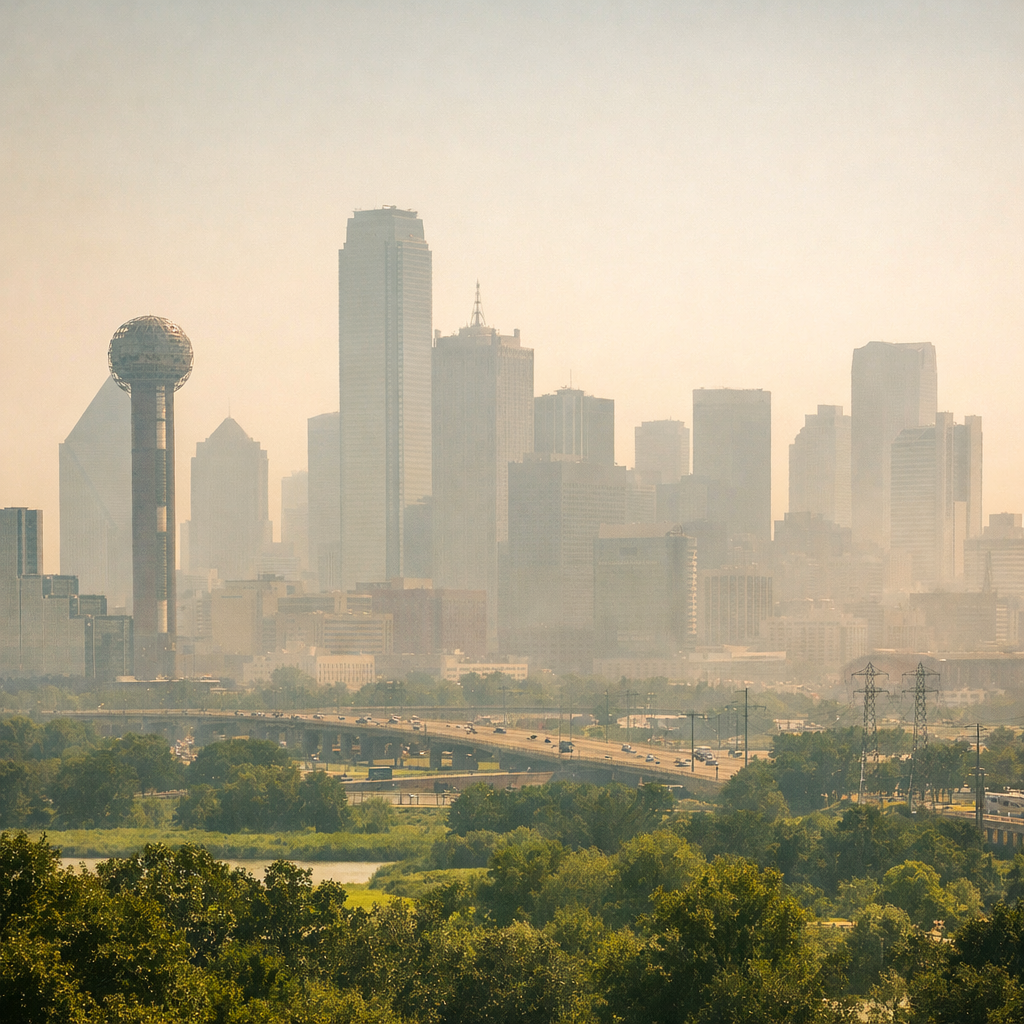
Air pollution is a growing concern in North Texas, especially when it comes to ground-level ozone. Dallas/Fort Worth continues to violate federal air quality standards, affecting vulnerable populations like children and those with respiratory conditions.
What You Can Do
- Check daily Air Quality Index (AQI) reports—especially on hot, sunny, or stagnant days.
- Reduce pollutant-producing activities: drive less, use public transit, avoid idling vehicles.
- Support shade trees and green spaces, which help cool neighborhoods and absorb pollutants.
- Stay educated about industrial zoning—facilities are often located near residential areas.
Bottom Line
Dallas’s climate offers plenty of variety: from sultry summers that stretch for months, to milder winters, and a transient spring that brings both beauty and danger. If you stay aware—watching storm forecasts and monitoring air quality—you’ll be better equipped to enjoy life in this city, whatever the weather has in store.